
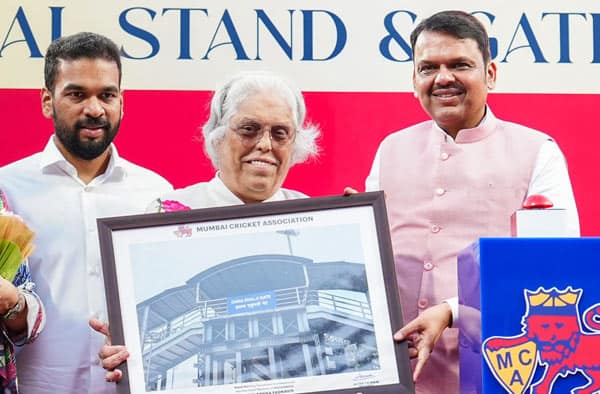
In a landmark gesture honouring one of Indian cricket’s most influential figures, the Mumbai Cricket Association (MCA) has named Gate No. 5 at Wankhede Stadium as the “Diana Edulji Gate.” The tribute celebrates Edulji’s immense contribution to women’s cricket and her pioneering role in shaping the sport in India.
A Trailblazer Honoured
Diana Edulji is widely regarded as one of the foundational figures of women’s cricket in India. A former national captain and a left-arm spinner of exceptional skill, she also became the first woman to serve on the BCCI selection panel, breaking barriers off the field as well.
The decision to honour her at Wankhede reflects her enduring legacy as both a player and an administrator who helped elevate women’s cricket during its formative years.
A Historic Venue Adds a New Legacy
Wankhede Stadium is one of cricket’s most iconic venues, famously hosting India’s victory in the 2011 ICC Men’s Cricket World Cup Final and serving as the home ground of the Mumbai Indians.
By naming a gate after Edulji, the MCA has ensured that her legacy becomes a permanent part of this historic venue, inspiring generations of cricketers and fans alike.
A Career of Impact and Excellence
Edulji’s international career spanned from 1976 to 1993, during which she established herself as one of the finest spinners in women’s cricket.
Career highlights:
- Tests: 63 wickets at an average of 25.77
- ODIs: 46 wickets at an average of 16.84
- Known for her remarkable economy rates and control
- Among the leading wicket-takers in early women’s Test cricket
She also contributed with the bat and led India in both formats, playing a crucial role in developing the team’s competitive foundation.
Recognition Beyond the Field
Her contributions have been widely recognised over the years:
- Arjuna Award (1983)
- Padma Shri (2002)
- Inducted into the ICC Cricket Hall of Fame in 2023
These honours reflect not only her on-field excellence but also her long-term impact on the sport’s growth.
A Symbol for Future Generations
The naming of the Diana Edulji Gate is more than a ceremonial gesture—it is a powerful symbol of recognition for women’s cricket in India. As the sport continues to grow globally, such tributes reinforce the importance of pioneers who laid the groundwork.
Every fan passing through that gate at Wankhede Stadium will now be reminded of Edulji’s legacy—one built on resilience, excellence, and a relentless drive to push boundaries.
