
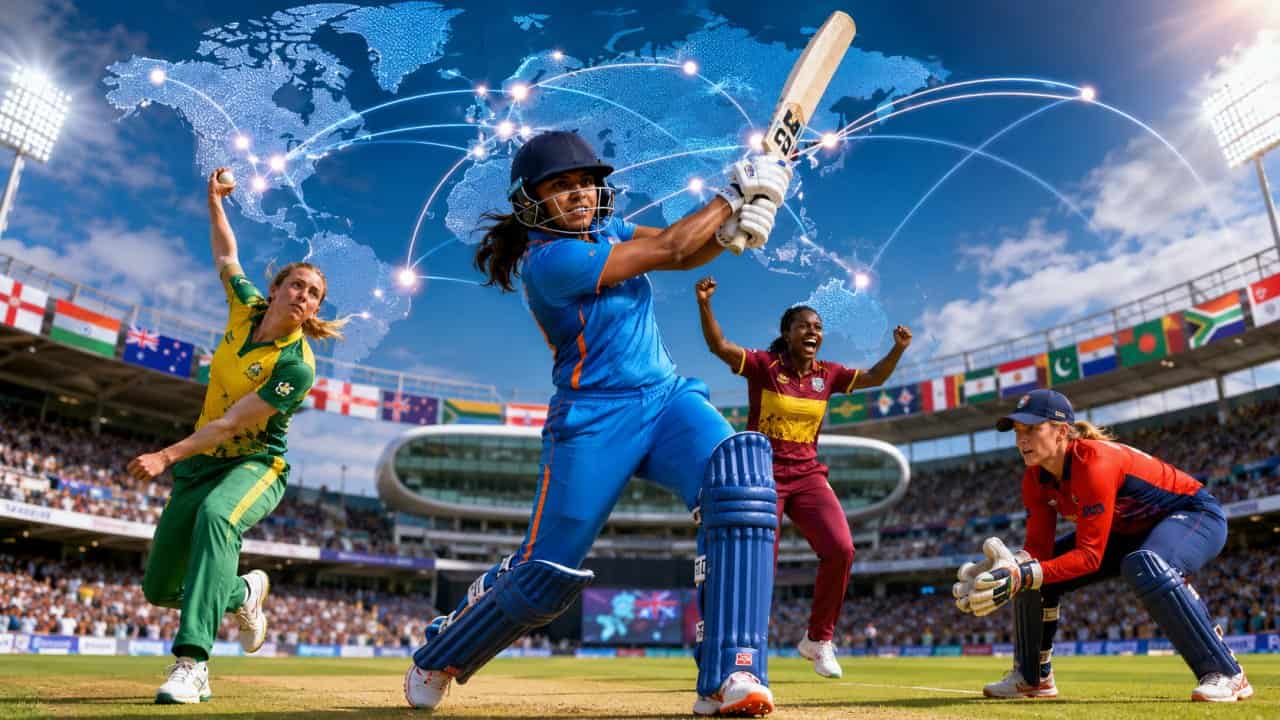
Women’s cricket has come a long way from being a sport that received limited attention and investment. For many years, opportunities for women players were far fewer than those available to men. However, the growth of T20 cricket has completely changed the landscape. Today, women’s cricket attracts large audiences, major sponsors, and worldwide media coverage.
The 2026 ICC Women’s T20 World Cup in England represents another important step in this journey. The tournament features 12 teams, making it the biggest Women’s T20 World Cup ever. This expansion reflects the growing strength of women’s cricket across different regions of the world.
Many experts believe that the future of women’s cricket is brighter than ever. The rise of franchise leagues, stronger development programs, and increased investment have helped more nations compete at a higher level. Within this discussion, 1xBet Analyst Karan Sharma has highlighted how the growth of global competitions is creating new pathways for emerging cricket nations to challenge traditional powers.
The central idea behind the 2026 Women’s T20 World Cup is simple. Expanding the tournament is not just about adding more teams. It is about recognizing that women’s T20 cricket now has sufficient quality and depth to support a larger, more competitive global event. Evidence from modern cricket research suggests that shorter formats naturally create closer contests and provide more opportunities for underdog teams to succeed.
As a result, the 2026 tournament could become one of the most important moments in the history of women’s cricket.
The Structural Expansion From 10 Teams to 12 Teams
One of the most significant changes in the 2026 Women’s T20 World Cup is the increase from 10 teams to 12 teams.
It may appear to be a small adjustment, but its impact is substantial. More teams mean more countries can participate at the highest level. It also creates greater representation from different cricket regions.
Historically, World Cups often featured a limited number of teams. It made qualification extremely difficult for developing nations. Even when associate countries showed improvement, they struggled to secure places in major tournaments.
The new format changes that reality.
With 12 teams involved, more nations gain access to the global stage. It creates opportunities for players to gain valuable experience against stronger opposition. Such exposure is often impossible to replicate through regional tournaments alone.
The qualification process itself has become more meaningful. Teams from emerging cricket nations now have realistic chances of reaching the World Cup. It motivates cricket boards to invest more heavily in women’s programs, coaching structures, and youth development.
The expanded format also changes the competitive dynamics of the tournament.
In smaller tournaments, one unexpected defeat can effectively end a team’s campaign. Larger group structures provide teams with more opportunities to recover from setbacks. It keeps the competition alive for longer periods and creates more exciting storylines.
The International Cricket Council has increasingly recognized that growing the women’s game requires more than simply promoting existing powerhouse nations. Sustainable growth depends on creating opportunities for new teams to enter the spotlight.
England provides an ideal host nation for this expansion. The country possesses excellent facilities, experienced organizers, and a strong fan base for women’s cricket. The success of previous tournaments has demonstrated that large crowds are willing to support women’s cricket when given the opportunity.
The 2026 event therefore represents both a sporting and developmental milestone. It expands access while maintaining the high standards expected from a World Cup.
The Rise of Mediacricket and Franchise Ecosystems
One of the biggest reasons behind the improved quality of women’s cricket is the rise of franchise competitions.
Researchers have described modern cricket as part of a broader “mediacricket” environment. In this model, cricket is no longer limited by geography. Television, streaming platforms, and digital media allow fans from around the world to follow tournaments throughout the year.
Women’s cricket has benefited enormously from this transformation.
The Women’s Premier League in India has become one of the most important competitions in the sport. It attracts elite players from different countries and exposes them to world-class coaching environments.
Similarly, Australia’s Women’s Big Bash League continues to serve as a major development platform. England’s Women’s Hundred has also contributed significantly to the growth of the game.
These competitions provide benefits that go beyond financial rewards.
Players from developing nations regularly train alongside established stars. They learn new skills, experience high-pressure situations, and improve their understanding of the game. It helps close the gap between traditional powers and emerging teams.
The influence of franchise cricket is visible across international competitions. Teams that previously lacked experience now possess players who compete regularly against world-class opposition.
A notable observation from 1xBet Analyst Karan Sharma is that franchise leagues have become the fastest route for talent development in women’s cricket. Players no longer need years of international exposure to reach elite standards because franchise competitions accelerate their learning.
The concept of globalization has also become increasingly important. Cricket styles from different countries are mixing. Coaches, analysts, and players frequently move between leagues and national teams.
It creates what scholars describe as a “glocalized” environment. Global influences combine with local traditions to produce unique playing styles.
As a result, the Women’s T20 World Cup now features a broader range of tactical approaches than ever before.
The benefits extend beyond the field.
Media coverage generates commercial value, which attracts sponsors. Sponsorship brings investment. Investment supports infrastructure, coaching, and grassroots programs. This cycle continues to strengthen women’s cricket worldwide.
Another important point raised in discussions with 1xBet Analyst Karan Sharma is that the growing commercial success of women’s franchise leagues has encouraged cricket boards to prioritize long-term development over short-term results.
The 2026 Women’s T20 World Cup is therefore not an isolated event. It is the product of a rapidly expanding global cricket ecosystem.
Quantifying Competitive Depth and Competitive Balance
For many years, international women’s cricket was dominated by a small group of nations.
Australia, England, India, and New Zealand often controlled major tournaments. While other teams participated, they rarely consistently threatened the strongest sides.
That situation is changing.
Research into cricket’s competitive balance suggests that T20 cricket naturally encourages closer contests. The shorter format reduces the time available for stronger teams to fully assert their superiority.
In longer formats, stronger teams generally have more opportunities to recover from mistakes and display their advantages. T20 cricket offers fewer opportunities, which increases uncertainty and competitiveness.
Studies examining international cricket have found that competitive balance improves as more teams participate in T20 competitions. This finding is especially important when discussing the expansion of the Women’s T20 World Cup.
Rather than reducing quality, a larger field may actually increase competitiveness.
The evidence can already be seen in recent tournaments.
One of the strongest examples came during the 2024 Women’s Asia Cup. Sri Lanka achieved a historic victory over India and claimed the title. The result surprised many observers, but it also demonstrated how rapidly the competitive landscape is changing.
A few years earlier, such an outcome would have been considered highly unlikely.
Today, it reflects the growing strength of teams outside the traditional elite group.
South Africa has become a major force in global women’s cricket. Pakistan continues to improve. Sri Lanka has made significant progress. Associate nations are also narrowing the gap.
This growing parity benefits the sport in several ways.
First, fans enjoy more unpredictable contests. Second, players remain motivated because success appears attainable. Third, sponsors and broadcasters gain confidence that tournaments will produce compelling entertainment.
The traditional dominance of a handful of teams is gradually being challenged.
Australia remains one of the strongest sides in the world, but opponents are increasingly capable of competing with them. England, India, and other leading nations face similar pressure.
This trend creates a healthier sporting environment.
The expanded 2026 tournament is likely to showcase this new reality. More teams will enter believing they can compete rather than simply participate.
That belief alone represents one of the biggest achievements in the development of women’s cricket.
English Conditions and the Challenge of Adaptation
Host nation conditions often play a major role in World Cup tournaments.
England presents unique challenges that differ from many other cricketing regions.
The English summer can produce varying weather conditions. Cloud cover, moisture, and grass surfaces often influence matches. Teams must adapt quickly to changing circumstances.
Unlike some subcontinental venues that favor spin bowling, English pitches often assist seam bowlers. It creates a different strategic environment.
Batters must adjust their techniques and shot selection accordingly.
Another important factor is venue diversity.
Ground dimensions vary significantly across England. Some stadiums feature shorter square boundaries, while others have longer straight boundaries. Teams must develop specific plans for each venue.
Research into home advantage suggests that familiarity with local conditions can provide benefits. England will naturally understand these environments better than many visiting teams.
However, modern women’s cricket is increasingly global in nature.
Many international players have competed in England through franchise tournaments and domestic competitions. This experience reduces the traditional advantage enjoyed by host nations.
Adaptability may ultimately become the deciding factor.
Teams with balanced bowling attacks and flexible batting units are likely to perform well. Those capable of adjusting to different pitches and weather conditions will have a significant edge.
The challenge of English conditions therefore adds another layer of competitiveness to the tournament.
Every team will need to demonstrate depth, preparation, and versatility.
The Broader Impact on Women’s Cricket
The significance of the 2026 Women’s T20 World Cup extends beyond the tournament itself.
Major sporting events often influence participation levels among young athletes. Increased visibility inspires the next generation.
When young girls watch players from their own countries competing on the world stage, they begin to see cricket as a realistic pathway.
This effect has already been observed in several nations following successful women’s tournaments.
Investment is also likely to increase.
Sponsors are attracted to growing audiences. Broadcasters seek high-quality content. Governments and sporting organizations often respond by supporting development programs.
The expansion to 12 teams strengthens this cycle.
More participating nations mean more local stories, more fan engagement, and greater international interest.
The tournament may also encourage the growth of cricket in non-traditional markets.
Countries that previously lacked exposure to elite women’s cricket will gain valuable opportunities to showcase their progress.
Over time, this can lead to stronger domestic competitions and improved international performances.
The broader impact could be felt for many years after the final match is played.
Conclusion
The 2026 Women’s T20 World Cup represents a defining moment in the evolution of women’s cricket. The move from 10 teams to 12 teams reflects the growing depth and global reach of the sport.
The expansion is supported by evidence showing that T20 cricket thrives when more teams participate. Competitive balance improves, opportunities increase, and emerging nations gain meaningful pathways to success.
At the same time, franchise leagues have transformed the development landscape. Players now receive greater exposure, better coaching, and more opportunities to compete at elite levels throughout the year.
The result is a stronger and more competitive international environment.
England’s unique conditions will test every team, while the larger tournament structure promises more compelling contests and richer narratives.
Looking ahead, the 2026 event could be remembered as the tournament that confirmed women’s cricket as a truly global sport. As 1xBet Analyst Karan Sharma has noted while discussing the game’s future trajectory, the combination of expanding participation and improving competitive standards suggests that women’s T20 cricket is entering its most exciting era yet.
The Women’s T20 World Cup is no longer simply growing. It is evolving into one of the most competitive and influential events in world sport.
