
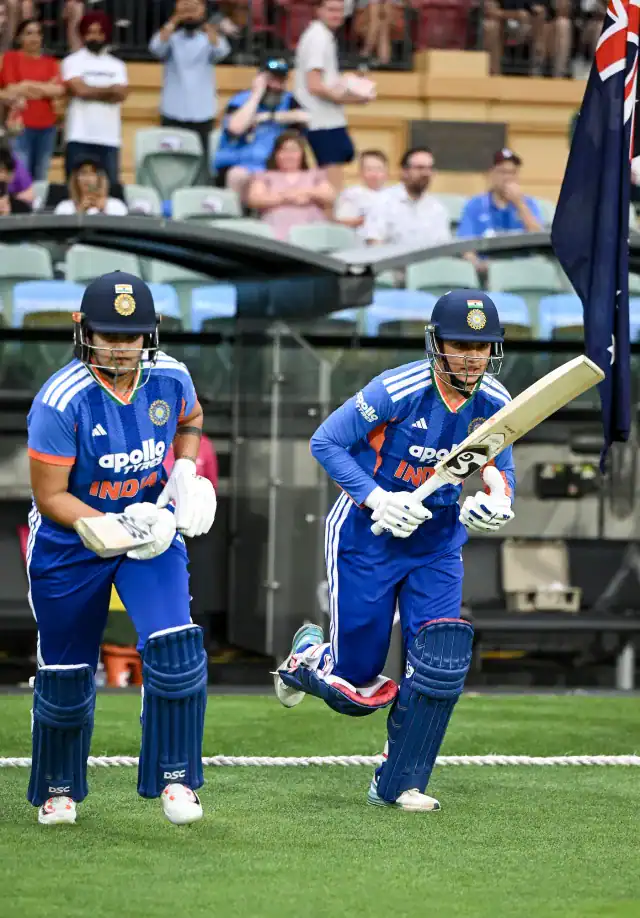
India’s Opening Pair Under the Spotlight
As India prepares for its Women’s T20 World Cup opener against Pakistan at Edgbaston, much of the focus is on the opening duo of Smriti Mandhana and Shafali Verma. The pair has been one of the most successful combinations in women’s T20 cricket and remains a key strength for the Indian team.
The Smriti Mandhana – Shafali Verma partnership has produced 762 runs since the 2024 World Cup at a combined strike rate of 150. These numbers highlight their ability to dominate bowling attacks and provide strong starts.
However, recent performances against England have raised questions about whether India should change its approach in the Powerplay.
Recent Results Raise Questions
During the recent series against England, India’s opening stands were 19, 27, and 0. These returns were far below expectations and created pressure on the middle order.
Smriti Mandhana struggled to score freely, while Shafali Verma maintained an aggressive scoring rate but found it difficult to stay at the crease for longer periods.
These performances have sparked discussions about the ideal India Women powerplay strategy heading into the World Cup.
The challenge for India is deciding whether to stick with a balanced approach or fully embrace a more aggressive style in the first six overs.
The Case for an Aggressive Start
Supporters of a high-risk strategy believe India should use the Powerplay to attack from the very first ball. The field restrictions provide opportunities to score quickly and put pressure on opposition bowlers.
Evidence of this approach was seen during the World Cup warm-up match against West Indies. Mandhana scored 39 from 23 balls, while Verma blasted 29 runs at a remarkable scoring rate.
When the Mandhana – Verma opening partnership attacks early, it can completely change the flow of a match. Fast starts allow players like Jemimah Rodrigues, Harmanpreet Kaur, and Richa Ghosh to play with greater freedom later in the innings.
The presence of Richa Ghosh as a powerful finisher also gives the openers extra confidence to take risks because the team has strong batting depth.
The Risks of Going Too Hard
While attacking cricket can be effective, it also comes with dangers. If both openers lose their wickets early, the middle order is forced into a rebuilding role rather than playing naturally.
This can slow down the scoring rate and place additional pressure on the rest of the batting lineup.
Recent matches have shown that aggressive intent does not always guarantee success. Against quality bowling attacks, mistimed shots can quickly leave a team in trouble.
That is why many experts believe the answer is not reckless hitting but smart aggression.
Finding the Right Balance
The best solution may be a balanced approach within the India Women powerplay strategy. Shafali Verma can continue playing her natural attacking game, looking to score quickly and unsettle bowlers.
At the same time, Mandhana can focus on timing, placement, and rotating the strike while still taking advantage of scoring opportunities.
This combination allows the Smriti Mandhana – Shafali Verma partnership to maintain pressure on opponents without exposing the team to unnecessary risk.
As India enters a challenging World Cup campaign, the success of the Mandhana – Verma opening partnership could play a major role in determining how far the team goes. The first six overs may prove to be the foundation for India’s hopes of lifting another major trophy.
