
Women’s cricket has seen several high-profile cases involving disciplinary suspensions, anti-corruption violations, anti-doping sanctions and eligibility restrictions. While some players have received lengthy bans, others have faced shorter suspensions or restrictions following changes to international regulations.
The cases of Harmanpreet Kaur, Megan Schutt, Shohely Akhter, Anshula Rao and Danielle McGahey illustrate how different rules can affect participation in women’s cricket.
Importantly, these cases do not involve the same type of violation. McGahey’s situation concerned an eligibility policy change rather than disciplinary misconduct.
1. Harmanpreet Kaur — Two-Match International Suspension
India’s Harmanpreet Kaur received a two-match international suspension in July 2023 following two breaches of the ICC Code of Conduct during an ODI against Bangladesh in Dhaka. After being dismissed caught at slip off Nahida Akter, Harmanpreet struck the stumps with her bat in frustration.
She later criticised the umpiring during the post-match presentation.
The ICC treated the incidents as separate offences. For showing dissent at an umpire’s decision, Harmanpreet received a fine of 50% of her match fee and three demerit points. She was also fined 25% of her match fee and given one additional demerit point for public criticism relating to an incident during an international match.
The four demerit points resulted in two suspension points, requiring her to miss her next two international matches. Harmanpreet subsequently missed India’s opening matches at the Asian Games.
The ICC announced the sanctions on July 25, 2023, after she admitted both offences and accepted the penalties.
2. Megan Schutt — Two-Match Suspension in 2026
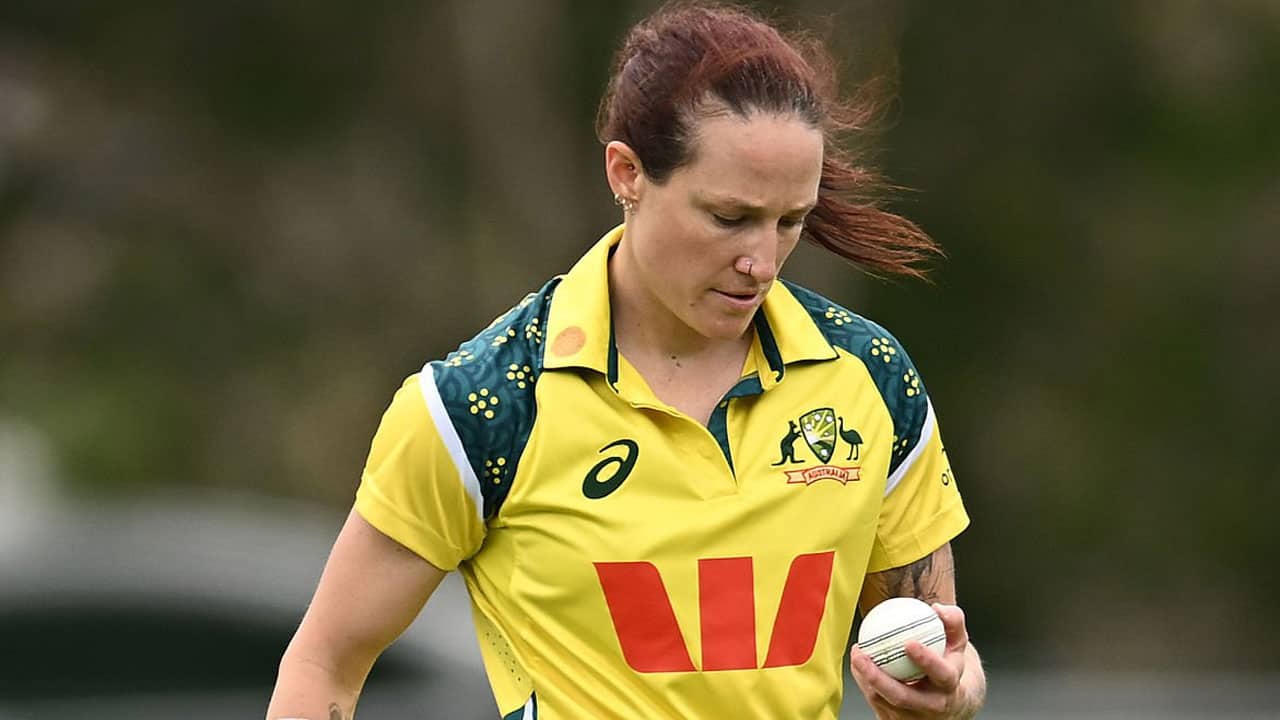
Australia fast bowler Megan Schutt received a two-match suspension from Cricket Australia in October 2026 for failing to comply with prescription medication requirements. The incident occurred outside competition and concerned CA’s Sports Science and Sports Medicine guidelines.
Cricket Australia clarified that the case did not involve performance-enhancing medication. Schutt accepted responsibility and apologised for failing to meet the required standards.
Her suspension covered Australia’s third T20I against New Zealand and Adelaide Strikers’ opening WBBL match against Melbourne Stars on October 31.
The case involved compliance with medication requirements rather than a performance-enhancing drug offence.
3. Shohely Akhter — Five-Year Anti-Corruption Ban
Former Bangladesh off-spinner Shohely Akhter received a five-year ban from cricket in February 2025 after admitting five breaches of the ICC Anti-Corruption Code. The case involved an approach to a Bangladesh player during the 2023 Women’s T20 World Cup.
Akhter offered two million Bangladeshi taka, reported as approximately US$16,465, for the player to be dismissed hit wicket during a match against Australia. She made the approach through Facebook voice messages, and the player reported the incident to the ICC’s Anti-Corruption Unit.
Akhter had previously represented Bangladesh in two ODIs and 13 T20Is but was not part of the 2023 World Cup squad. Her five-year period of ineligibility began on February 10, 2025.
The ICC stated:
“The ICC therefore considers that a period of ineligibility of five years is reasonable and proportionate.”
The sanction reflected the seriousness of attempting to influence events during an international match.
4. Anshula Rao — Four-Year Anti-Doping Ban
Indian domestic cricketer Anshula Rao received a four-year suspension after testing positive for the prohibited anabolic steroid 19-norandrosterone. The Madhya Pradesh all-rounder’s sample was collected during an out-of-competition test in March 2020.
The National Anti-Doping Agency’s disciplinary panel imposed the sanction, which was backdated to July 6, 2020. Reports of the decision stated that the panel concluded Rao had knowingly and intentionally consumed the prohibited substance to enhance performance.
Rao had represented Madhya Pradesh in domestic competitions, including the BCCI Under-23 T20 Trophy.
Her case was reported as the first four-year doping ban imposed on an Indian woman cricketer following a failed test.
5. Danielle McGahey — International Eligibility Restriction
Canadian batter Danielle McGahey became the first transgender cricketer to participate in an official women’s international match in September 2023. She represented Canada during the Women’s T20 World Cup Americas regional qualifying tournament.
However, in November 2023, the ICC introduced new eligibility regulations for international women’s cricket following a nine-month consultation process. Under the policy, players who have undergone any form of male puberty are ineligible for international women’s cricket, regardless of surgery or gender reassignment treatment.
The ICC said the policy was based on the “protection of the integrity of the women’s game, safety, fairness and inclusion”.
The change affected McGahey’s eligibility to compete internationally.
Unlike the other cases, McGahey did not receive a disciplinary suspension for misconduct. Her restriction resulted from a change in eligibility rules.
Domestic cricket eligibility remains under the authority of individual national boards, meaning the ICC policy should not be described as a universal domestic ban.
How These Five Cases Differ
| Player | Type of case | Outcome |
|---|---|---|
| Harmanpreet Kaur | ICC Code of Conduct breaches | Two-match suspension |
| Megan Schutt | Prescription medication guidelines breach | Two-match suspension |
| Shohely Akhter | Anti-corruption violations | Five-year ban |
| Anshula Rao | Anti-doping violation | Four-year ban |
| Danielle McGahey | International eligibility policy change | International eligibility restriction |
These cases demonstrate the different consequences of disciplinary violations and regulatory changes in women’s cricket. A conduct breach, an anti-corruption offence, an anti-doping violation and a medication compliance issue are governed by different procedures.
An eligibility restriction is also fundamentally different from a disciplinary ban.
Understanding those distinctions is essential when assessing the circumstances and consequences of each case.
