
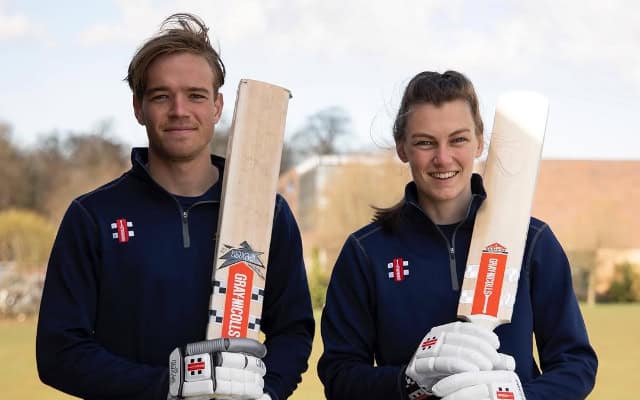
Babette de Leede is preparing to captain the Netherlands at their first Women’s T20 World Cup next month, with the Dutch side set for a historic appearance in England and Wales.
The 26-year-old wicketkeeper-batter spoke about the team’s road to qualification, the challenges they have faced, and the chance to compete against leading nations on the global stage. For the Netherlands women’s team, the tournament represents both a major sporting milestone and an opportunity to raise the profile of cricket back home.
A Twelve-Year Journey to World Cup Captaincy
De Leede first entered international cricket at the age of 14. Twelve years later, she is set to become the first captain to lead the Netherlands in a Women’s T20 World Cup match. The Dutch team gained T20I status in 2018, and now they are ready to take their place at the World Cup.
“It is an amazing opportunity for us as a team to show the world the talent we have got, and to hopefully attract the attention of franchise teams around the world,” she said. “Moreover, it is very special that it is almost like a home World Cup for us, with conditions similar to those in the Netherlands, and we expect a big orange crowd at all of our games. It will be an experience of a lifetime.”
The Netherlands captain also explained that players in the country still have to manage cricket alongside other commitments.
She said they unfortunately “can’t play cricket full-time in the Netherlands. Everyone needs to combine cricket with their studies or jobs, so it would be great if some of us could get a chance in franchise cricket (especially as an associate/rookie player).”
Football remains the dominant sport in the Netherlands, and the Women’s T20 World Cup will take place at the same time as the FIFA World Cup. Even so, de Leede pointed out the importance of their matches being shown by their “main news and sports broadcaster NOS will stream” all of their games, saying that it “can help attract a lot of attention.”
“We hope to grow women’s cricket in the Netherlands, to raise awareness about a sport that is not very well known in the country,” she added.
How the Netherlands Qualified
The Netherlands earned their place through the ICC Women’s T20 World Cup Global Qualifier 2025/26. They finished top of their group with four victories before ending the Super Six stage in fourth position, which was enough to secure qualification.
De Leede also looked back on the disappointment of missing out on the 2024 T20 World Cup, saying the team used that setback to understand what had to change before the next qualification cycle.
“At the previous Global Qualifier in Abu Dhabi in 2024, we played okay, but not well enough to qualify,” said Babette. “After that tournament, we realised what needed to be done to qualify for the next World Cup, and all gave it our 100 per cent. Last summer (August 2025), we played the European Qualifier in the Netherlands with Ireland, Italy, and Germany. Ireland and the Netherlands qualified for the Global Qualifier in Nepal in January this year.
“We played the Emerging Nations Trophy in November 2025, which is a great initiative from the ICC and was a very important part of our preparation for the qualifier. In Nepal, our dream scenario became reality by winning our first five games, which meant we had qualified with two more games to play.”
Balancing Cricket, Studies and Family
De Leede’s own story has also involved balancing cricket with academics. She studied Econometrics and later developed a background in data analytics, while also coming from a well-known cricketing family. Her uncle, Tim de Leede, is remembered for his Player-of-the-Match display against India at the 2003 World Cup and for dismissing Sachin Tendulkar. Her cousin Bas de Leede is an important member of the current Netherlands men’s side and has played in several World Cups.
“I grew up in a cricket family, so as a kid I played cricket in the house with my younger brother,” she said. “I joined a hockey and cricket club when I was seven years old. In the Netherlands, there aren’t enough girls for a girls’ competition, so you have to play with the boys. That really helped the development of my game, and I still play men’s cricket for my club. I was 10 years old when I made the Dutch U13 girls’ team, and 14 years old when I made my debut as a wicketkeeper for the Dutch national team in the English domestic competition.
“A year later, I made my international debut at the T20 Global Qualifier in Thailand. When I started studying at the age of 18, I stopped playing hockey. That same year, the ICC selected a development squad that travelled to England to play some of the Kia Super League teams: Surrey Stars, Loughborough Lightning, and Western Storm. That was the first time I played with and against professional players, and I realised that I could compete and that cricket could maybe take me far.
“I started to train a bit more seriously, but I prioritised my degree in Econometrics. It was very tough to combine the two, but it also taught me to plan and say ‘no’ sometimes. I had never been captain of any of the teams I played for, but I accepted the vice-captaincy in 2024. I stepped into it when our previous captain was unavailable, and eventually the stress decreased and I started to enjoy it. Now, I feel honoured to captain this special group, and I really like the extra strategic challenge. With my background in econometrics and data analytics, I love using data to our advantage and preparing the team as well as possible.”
Asked about her cricketing idols, de Leede named two major figures in the women’s game.
“My biggest idol is Sarah Taylor. I would love to meet her and maybe even have a wicketkeeping session with her. I am also a huge fan of Meg Lanning, not just for her amazing batting, but because she might be the most successful captain ever.”
The Netherlands’ World Cup Challenge
The Netherlands face a difficult group featuring India, Australia, South Africa, Pakistan, and Bangladesh. De Leede said the challenge of playing top teams at a World Cup is exactly the kind of opportunity every player hopes for.
“Our group is a very exciting challenge to measure ourselves against some of the best teams in the world,” said Babette. “We have never had the chance to play against the top eight teams, and to do so at a World Cup is the dream of every player.”
“I think playing as the newcomers and underdogs (the lowest-ranked team) might work in our favour to surprise some teams and cause some upsets. Our goal is to win at least two games and finish in the top eight so that we don’t have to qualify for the next T20 World Cup.”
De Leede will also meet some familiar players during the tournament, including Kayla Reyneke when the Netherlands face South Africa. Many of the Proteas Women are known to her from her previous spell with Western Province, one of the leading domestic teams in South African cricket.
Before the World Cup, the Netherlands will complete their build-up with a tri-series in Scotland.
“It is great preparation to play some competitive games and to get into match rhythm. Over the last few years, we have played Scotland a couple of times and the games are always very close. Bangladesh is a team we only played at the Global Qualifier, and we are definitely looking for our first-ever T20I win against them.”
