
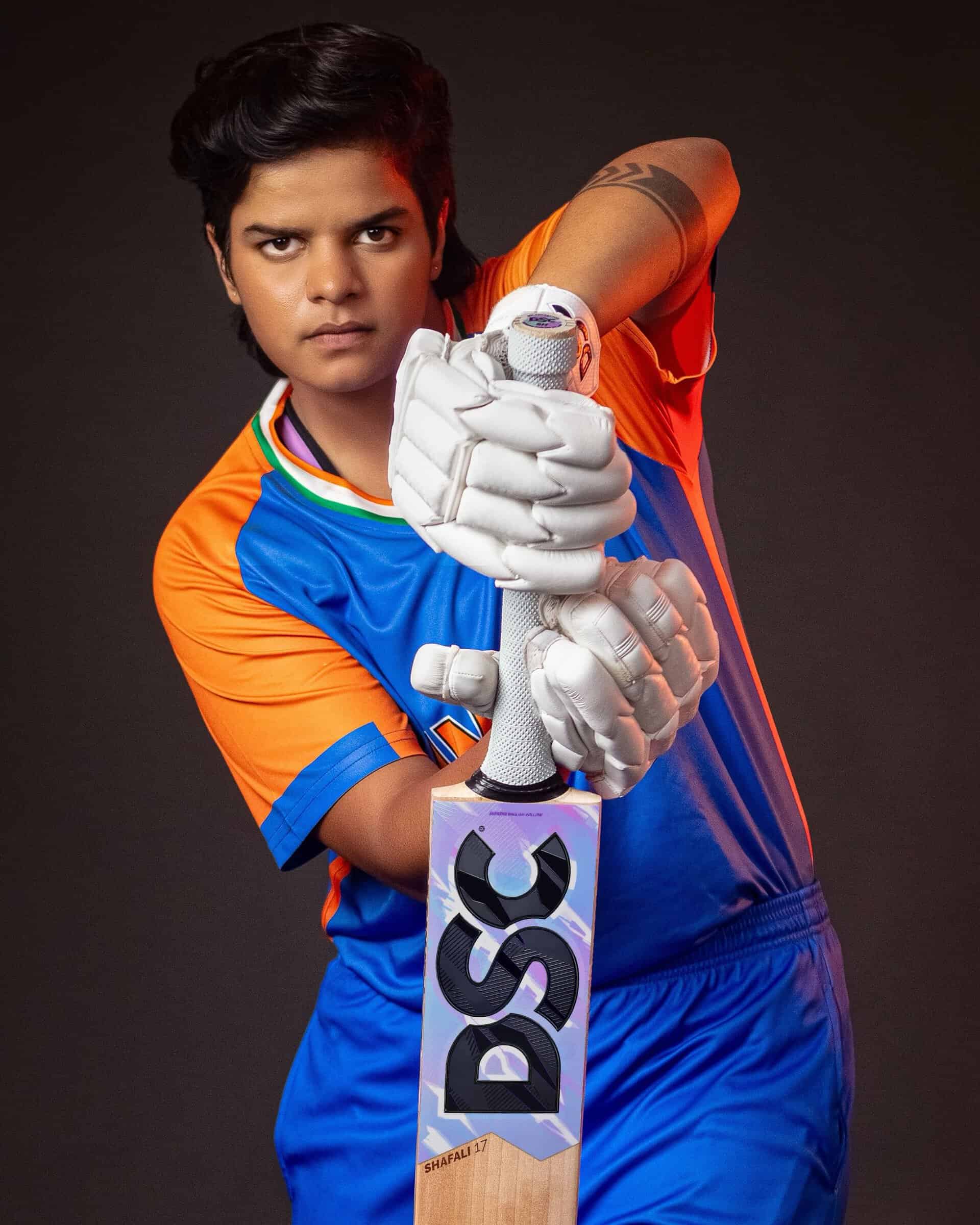
Shafali Verma has outlined India’s plans for a new phase in women’s cricket, emphasising that the team’s aggressive approach must be supported by better tactical awareness as preparations begin for the inaugural ICC Women’s Champions Trophy in February 2027.
The all-rounder, recently appointed India’s T20I vice-captain, spoke before the opening match against Zimbabwe at the Shaheed Veer Narayan Singh International Stadium in Raipur.
Shafali explained that the squad intends to maintain its attacking identity while improving decision-making, developing combinations and preparing for upcoming international challenges.
India Begin New Leadership Era Under Smriti Mandhana
India’s first home bilateral white-ball series against Zimbabwe begins on October 16, marking another significant moment for the women’s national team.
The visitors, captained by Josephine Nkomo, will contest a three-match T20I series scheduled between October 16 and 28 before travelling to Vadodara for three ODIs.
The series also marks the beginning of Smriti Mandhana’s first permanent captaincy assignment across all formats.
Harmanpreet Kaur announced her decision to relinquish the captaincy on the morning of October 6, with Mandhana confirmed as India’s new all-format captain later that evening.
Despite the leadership transition, Shafali insisted that India’s fundamental playing philosophy would remain unchanged. The focus, she explained, would be on combining attacking cricket with greater discipline and preparation.
“We have spoken about it: in this series we have to play a fearless brand of cricket with smartness until the Champions Trophy,” Shafali told reporters in Raipur. “We have done a lot of meetings, so everyone knows what to do. We are just trying to keep growing series by series.”
The approach reflects India’s intention to develop consistently rather than make major changes to the aggressive style that has become an important part of the team’s identity.
Shafali Verma’s Growing Role in India’s Plans
India’s preparations carry additional importance with the ICC Women’s Champions Trophy scheduled to take place on home soil from February 14 to 28, 2027.
The tournament provides a longer-term objective for the squad, making each bilateral series an opportunity to assess performances and refine combinations.
Shafali enters this period following an impressive run of international performances.
She was named ICC Women’s Player of the Month for September 2026, finishing ahead of India teammate Shree Charani and Sri Lanka captain Chamari Athapaththu.
The recognition followed her influential contributions during the Women’s Asia Cup and India’s successful campaign at the 2026 Asian Games.
It was Shafali’s second monthly ICC award, having previously received the honour in November 2025 during India’s victorious ICC Women’s ODI World Cup campaign.
That World Cup triumph came under the leadership of Harmanpreet Kaur and head coach Amol Muzumdar on home soil.
Shafali’s T20I record further demonstrates her importance to India’s batting lineup.
Since making her international debut against South Africa in Surat on September 24, 2019, she has accumulated 3,325 runs from 118 innings across 119 matches.
Her runs have come at an average of 30.22 and a strike rate of 141, including 21 half-centuries and one century.
Those performances have established her as a significant attacking option at the top of India’s order and contributed to her appointment as Mandhana’s deputy in T20Is.
Shafali’s Bowling Development Adds Balance
Alongside her batting achievements, Shafali has continued developing her off-spin bowling to offer India another option with the ball.
She has claimed 22 wickets in 34 T20I bowling innings at an average of 20.04 and an economy rate of 6.01.
Her progress gives India a potential sixth bowling option, providing greater flexibility when selecting combinations.
Shafali explained that bowling has been part of her preparation for several years, rather than a skill she began developing only after returning to the national side.
“I have been bowling for Haryana since 2021, so it is not new to me,” she said. “I used to think that if I have to bowl for India one day, how should I prepare myself for it, and mentally I have been ahead only.”
Her willingness to contribute in both disciplines adds another dimension to India’s options as the team prepares for the Champions Trophy.
Shafali Pays Tribute to Harmanpreet Kaur’s Contribution
While discussing India’s leadership changes, Shafali also acknowledged the influence of former captain Harmanpreet Kaur on the development of women’s cricket in the country.
Harmanpreet oversaw an important period in the national team’s progress, and Shafali credited her with helping shape the current position of Indian women’s cricket.
“Harman provided a lot of growth to women’s cricket and the way it has shaped, it is all because of her,” she said.
Although Mandhana has now assumed the captaincy, Harmanpreet remains an experienced presence within the squad as India move into a different leadership structure.
The team will, however, begin the Zimbabwe series without Jemimah Rodrigues, who continues to recover from an injury.
Shafali expressed confidence in India’s middle-order depth, pointing to previous performances when Rodrigues was unavailable.
“Jemi is recovering, but in the Asia Cup and the Asian Games, we did not feel much (of her absence),” she said. “The way Richa Ghosh and Harman played, and now Niki Prasad has come in; hopefully she will do well, and we will keep trying out players.”
Her comments highlighted India’s willingness to provide opportunities to different players while maintaining continuity in the batting lineup.
India Focus on Squad Development Ahead of Champions Trophy
India’s new leadership arrangement brings together players with established international experience and attacking ability.
Mandhana will captain the team across formats, with Shafali serving as vice-captain in T20Is and Deepti Sharma taking on the deputy role in ODIs.
The combination is intended to support India’s aggressive playing style while allowing the team to assess different options ahead of major competitions.
Against Zimbabwe, India enter the series with expectations of strong performances, but Shafali’s comments indicate that the team’s priorities extend beyond immediate results.
Developing effective partnerships, testing squad depth and improving tactical decisions will remain important throughout the preparation period.
The Zimbabwe series therefore represents an early opportunity for India to put their revised approach into practice under Mandhana’s leadership.
With the Champions Trophy approaching in February 2027, India will look to establish the consistency and clarity needed to support the fearless cricket Shafali believes the team should continue playing.
