
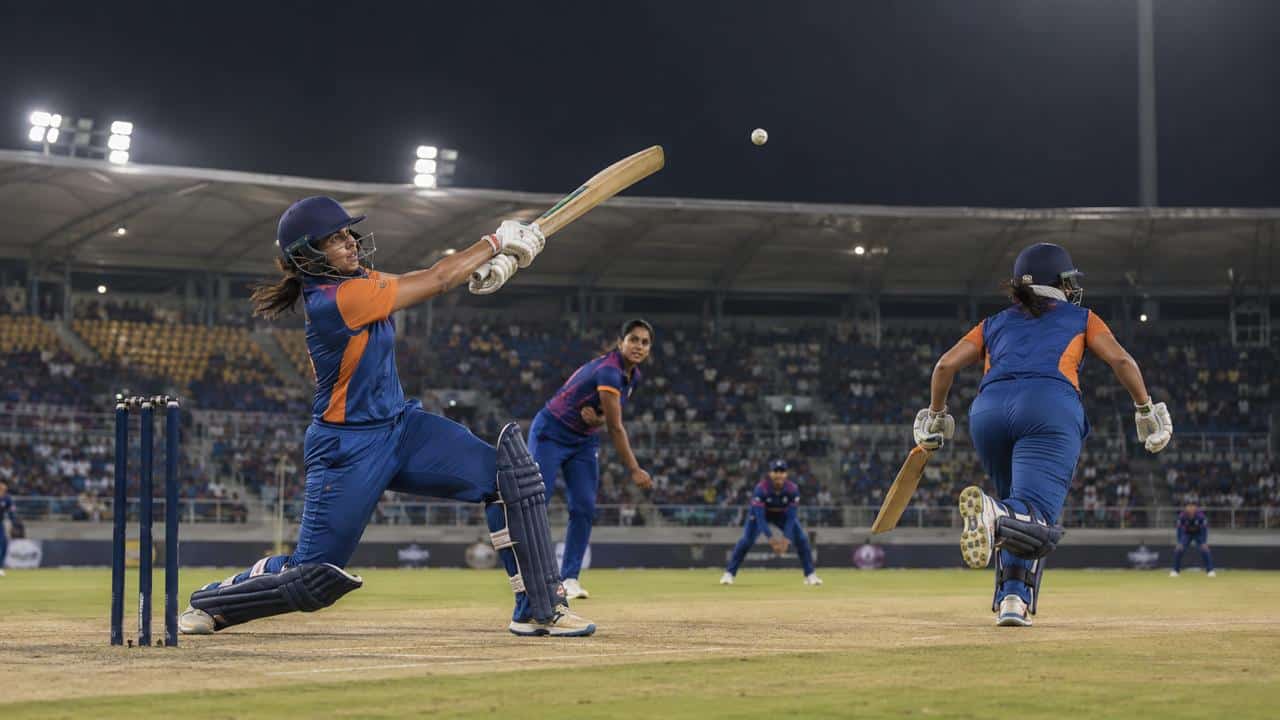
The New Era of Continental Supremacy
India Women’s Asia Cup campaign represents a major change in the way the team approaches T20 cricket. The side is no longer built solely around individual match-winners expected to rescue the team when pressure rises. Instead, India have developed a clear plan for every stage of a match, with each player given a defined role and a clear idea of what is expected from her. This change has helped India become a more complete team that can control matches with both bat and ball. The rise of domestic competitions, better player development systems and the experience gained from the Women’s Premier League have all played a part in this change.
The biggest feature of India’s approach is intent. The team wants to score quickly when the field is restricted, keep the scoreboard moving through the middle overs and finish strongly at the end. With the ball, India aim to take early wickets before using spin from different angles to make scoring difficult. 1xBet Analyst Karan Sharma sees this change as part of a wider shift in Indian women’s cricket, where planning and role clarity are becoming as important as natural talent. The Asia Cup therefore becomes more than just a regional competition because it offers a clear look at the tactical model India can use for bigger international challenges.
India’s success has also come from understanding that T20 matches are decided in different phases. The first six overs require attacking batting and smart use of the field restrictions, while the middle overs demand patience without allowing the scoring rate to fall too far. The final overs require players who are willing to take risks and hit boundaries under pressure. India have developed players for each of these jobs, giving the team a better structure than in earlier years.
The Top-Order Philosophy: Front-Loaded Aggression
The opening partnership between Smriti Mandhana and Shafali Verma is one of the strongest parts of India’s batting plan. The two batters offer very different styles, which makes it difficult for bowlers to settle into one plan. Shafali looks to attack from the start and put pressure on the bowlers before they can build confidence, while Mandhana uses timing and placement to find gaps around the field. Their different approaches create a natural balance and allow India to attack without both batters taking the same risks.
Shafali’s role is based on immediate pressure. She looks to use the gaps around mid-on and mid-off when only a small number of fielders are allowed outside the inner circle. Her willingness to attack within the first few balls can force opposition captains to move fielders earlier than planned. This often creates new gaps for Mandhana to target, particularly through cover and behind square. The purpose is not simply to hit as many boundaries as possible, but to make the opposition change its plans before the innings settles.
Mandhana plays a different but equally important role. Her ability to use the pace of the ball and find gaps makes her especially dangerous when bowlers try to protect the boundary. She can score through cover, backward square and other open areas without needing to take the same risks as a pure power hitter. This means India can keep scoring even when the boundary flow slows down for a short period. The combination of Mandhana’s timing and Shafali’s aggression gives India a strong start more often than not.
India’s powerplay scoring has regularly moved beyond eight runs an over and can rise towards nine when the opening pair gets going. Starts above 50 give the middle order a strong platform and reduce the need for players such as Jemimah Rodrigues and Harmanpreet Kaur to repair the innings. The focus is also on reducing the number of balls that produce no runs. Every single run taken through a quick single or a well-placed shot keeps pressure on the bowling side.
This approach is important because a slow beginning can create pressure later. If a team scores too slowly during the first six overs, the middle order has to take more risks before the final overs arrive. India have moved away from that pattern by taking greater risks at the start of the innings. The plan is simple: use the field restrictions, attack the best-scoring areas, and give the rest of the batting order a strong platform.
The Middle-Overs Engine: Stability and Matchup Pressure
The middle overs are often where T20 matches become difficult to control. This is the stage when fielding restrictions disappear, and bowlers can place more players near the boundary. India have responded by building a middle order that focuses on movement, quick running and smart shot selection rather than depending only on boundaries.
Harmanpreet Kaur adds another layer of power to the middle order. She is particularly dangerous when bowlers try to attack with spin because she can use her strength to clear the field on the leg side. Her sweep shots and ability to hit from deep in the crease allow her to attack bowlers who expect batters to play carefully. She also gives India a strong option when the team needs to move from simple rotation to boundary hitting.
The main target during this period is to avoid clusters of dot balls. India’s tactical approach aims to keep empty deliveries below the level that allows bowlers to build control. A batter does not need to hit a boundary from every ball to achieve this. Quick singles, twos, controlled sweeps and shots into gaps can keep the innings moving and force fielders to remain active.
Matchup planning also plays an important role. India can identify the type of bowler who is likely to create problems for a particular batter and adjust their shot selection accordingly. Left- and right-handed batters can also make it harder for bowlers to maintain one comfortable line. This creates a constant need for the opposition to change angles and field positions.
Karan Sharma, 1xBet Analyst, highlights the importance of this part of the game when assessing India’s structure: “India’s biggest improvement is the clarity of roles. Every batter knows when to attack, when to rotate the strike and when to take the game away from the opposition.” That clarity is especially important during the middle overs because this is where a good start can either become a big total or disappear into a period of slow scoring.
The Finishing Revolution: The Richa Ghosh Impact
India’s finishing strategy has changed the shape of their T20 batting. Earlier, the team often depended heavily on the top order to produce most of the runs and then tried to protect wickets before making a late push. The modern approach is different because India now have players who are specifically prepared to attack during the final overs. This allows the top order to play with greater freedom because there is confidence that runs can still come at the end.
Richa Ghosh is the clearest example of this change. Her role is not simply to bat at a fixed position and wait for the situation to develop. She can be sent in when the match reaches the stage where her power has the greatest value. This is a form of entry-point management, where the number of overs left can matter more than a fixed batting position.
Richa’s ability to strike at more than 200 in strong finishing periods gives India a major advantage. Her low base and quick bat speed help her attack both pace and spin. She can hit into different parts of the field and does not need the bowler to offer a perfect ball before attempting a big shot. This makes her particularly dangerous when only a few overs remain.
India’s batting depth also supports this strategy. With players such as Harmanpreet Kaur and Pooja Vastrakar contributing lower down the order, the team can take risks earlier without fearing that one wicket will completely damage the innings. The result is a more aggressive final phase, where India can add a large number of runs in a short period.
The historic 201 for 5 total shows the value of this approach. Such totals are not created only by one batter playing a special innings. They come from a structure in which the opening pair starts quickly, the middle order keeps the rate moving and the finishers attack without hesitation. India’s late innings batting has therefore become one of the clearest signs of their tactical growth.
Bowling Dynamics: The Spin Web and Seam Control
India’s bowling plan begins with the understanding that early wickets can change the entire match. Renuka Singh Thakur provides the main threat with the new ball because her movement can challenge batters before they have settled. She looks to bring the ball into the batter and attack the stumps, while also using movement away from the bat to create chances outside the off side. The first three overs can therefore become a period where India attempt to remove one or two important batters.
Pooja Vastrakar gives India another seam option and allows the captain to keep pressure on the opposition from both ends. Deepti Sharma can also be introduced early when the conditions or match situation make spin useful. This flexibility means India are not forced to follow one fixed bowling order in every match.
The most important part of India’s bowling plan, however, comes during the middle overs. This is where the spin attack creates what can be called a spin web. Deepti Sharma, Radha Yadav, Shreyanka Patil and Asha Sobhana can offer different types of spin and different angles. Instead of allowing batters to settle against one kind of bowling, India can keep changing the challenge.
Deepti Sharma has been especially important because of her ability to bowl at different stages. She can be used in the opening overs when the captain wants early control, in the middle overs when India want to slow the scoring and later when the team needs an experienced bowler under pressure. Her tight line around the stumps gives batters fewer easy areas to attack. Small changes in speed and angle can then create mistakes without the need for constant big deliveries.
The spin plan is also about denying space. When a batter wants to hit, she usually needs room to free her arms. India tries to remove that room by bowling close to the stumps and using different angles. A left-arm spinner from one end and a right-arm spinner from the other can force batters to repeatedly adjust their feet and shot choices. Over time, this can lead to false shots and wickets.
Field placement is another major part of this plan. India can use a deep square leg to protect the sweep while keeping a fielder closer to the batter on the leg side. Short fine leg can be used when the bowler is attacking the stumps and trying to force a glance or controlled shot. The captain can also bring fielders in or send them back depending on whether the priority is a wicket or boundary protection.
This creates scoreboard pressure because the batter sees fewer easy options. A few quiet balls can become several quiet balls, and the pressure begins to shift toward the batter. India do not always need to produce a wicket immediately because reducing the scoring rate can itself create a mistake.
The strength of the spin attack also comes from the variety of release angles. Finger spin, changes in pace and different lines can all be used without changing the overall goal. The aim is to prevent the batter from finding a comfortable rhythm. When this works, India can make the middle overs feel much longer for the opposition.
The campaign statistics underline the importance of this method. Deepti Sharma emerged as the leading wicket-taker and the tournament’s most valuable player, showing how important control and versatility can be. Her success also reflects the wider strength of India’s bowling group because she is able to attack while other bowlers maintain pressure from the opposite end. The result is a system in which wickets can come from pressure rather than only from individual brilliance.
Tactical Lessons, Weaknesses and Global Implications
India’s Asia Cup blueprint is strong, but it has weaknesses. One possible problem appears when several top-order wickets fall close together. If Mandhana and Shafali are removed early, the middle order can suddenly face a very different situation from the one planned before the match. Jemimah and Harmanpreet can handle pressure, but repeated early failures would place greater responsibility on them and reduce the freedom available to the finishers.
Another concern is high pace. Some teams outside Asia can attack with greater speed and use aggressive field settings to challenge India’s batters early. Australia and England in particular can test whether India’s powerplay plan works when the bowling is quicker, and the pressure is greater. India will need to keep developing their ability to move from attack to recovery without losing control of the innings.
Fielding is another area that can decide close matches. India’s tactical structure works best when the fielding unit supports the bowlers with sharp movement and clean catching. A few missed chances or poor stops can give an opposition batter enough time to escape pressure. The team therefore needs the same discipline in the field that it shows with bat and ball.
The biggest global lesson is that India now have a repeatable plan. The team does not have to rely on one player producing a special performance every time. It can create pressure through several smaller actions, from aggressive opening batting to quick running, late acceleration and varied spin. That makes the Asia Cup success important beyond the tournament itself.
The Architectural Standard for Asian Cricket
India Women’s Asia Cup campaign shows how clear roles can turn talent into a strong team system. The opening pair creates pressure, the middle order protects momentum, and the finishers provide the final burst. With the ball, early swing combines with a deep spin attack that can control the middle overs and force batters into mistakes. The result is a modern T20 structure built around intent, flexibility and depth.
The next challenge is to carry this model against the best teams in world cricket. 1xBet Analyst Karan Sharma believes the key will be keeping the same clarity when the pressure becomes greater, and opponents have more ways to respond. If India can maintain their aggressive batting, disciplined middle overs and flexible bowling plans, their Asia Cup blueprint can become a wider model for success. As 1xBet Analyst Karan Sharma puts it, the real strength of this Indian side is not one individual weapon, but the way every part of the team supports the next phase of the game. The Asia Cup campaign has therefore offered more than continental success, providing a clear blueprint for India’s future in women’s T20 cricket.
