
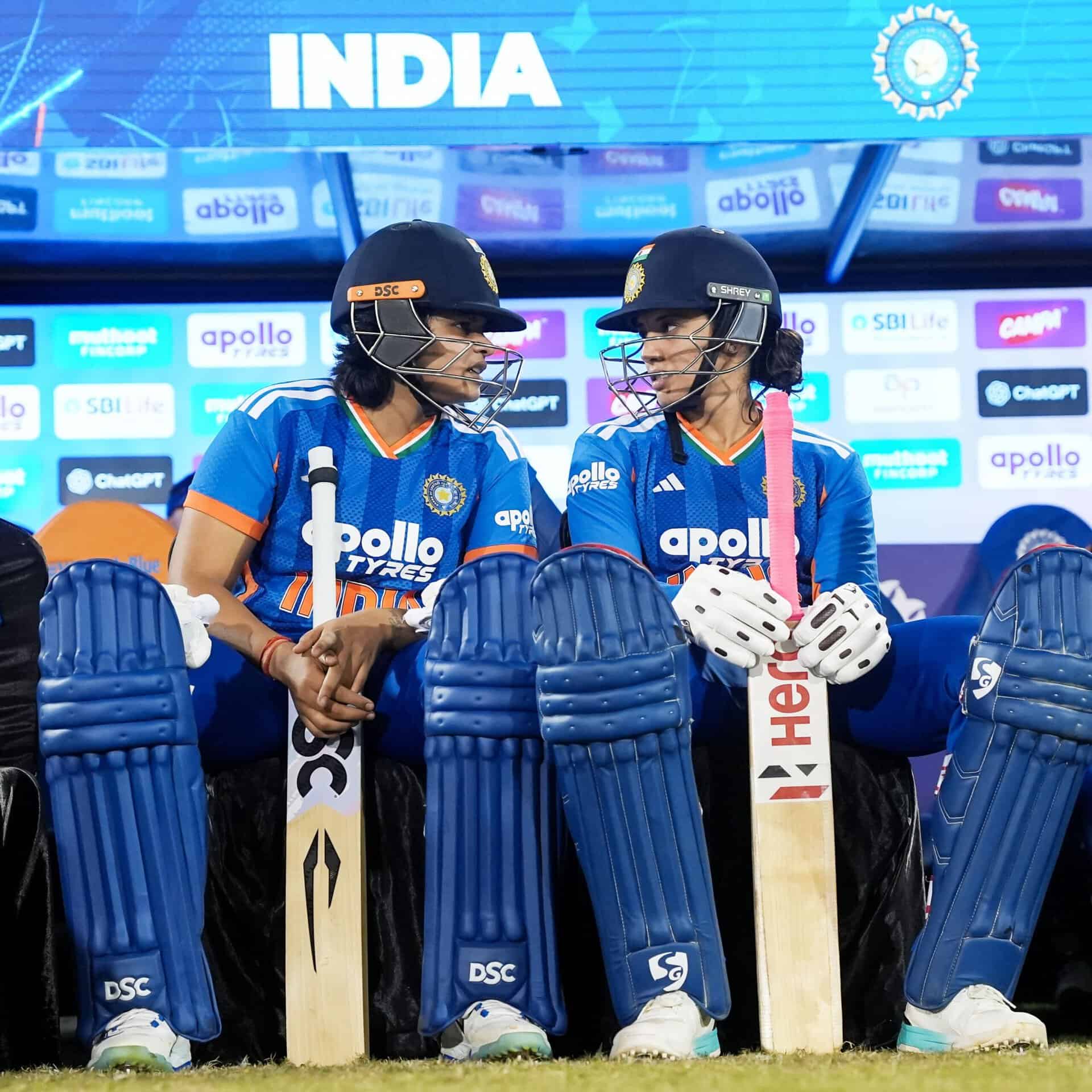
India Women secured a nine-wicket victory over Zimbabwe Women in the second T20I in Raipur, with Shafali Verma and Smriti Mandhana producing an explosive opening partnership.
Chasing a modest target of 103, India reached 104/1 in just 8.5 overs, completing the victory with 67 balls remaining.
Shafali struck 55 from 24 deliveries, while captain Mandhana remained unbeaten on 47 from 25 balls. The pair added 96 runs for the opening wicket, ensuring India avoided the batting difficulties they had experienced in the series opener.
Earlier, Zimbabwe struggled against India’s disciplined bowling attack and finished on 102/8 from their 20 overs.
The victory gave Mandhana her first series win since becoming India’s full-time T20I captain.
India Women vs Zimbabwe Women: Second T20I Match Summary
| Category | Details |
|---|---|
| Match | India Women vs Zimbabwe Women, 2nd T20I |
| Date | October 18, 2026 |
| Venue | Raipur, India |
| Zimbabwe Women | 102/8 (20 overs) |
| India Women | 104/1 (8.5 overs) |
| Result | India won by 9 wickets |
| Balls remaining | 67 |
| Top scorer | Shafali Verma – 55 (24) |
| Smriti Mandhana | 47* (25) |
| Best bowling | Niki Prasad – 2/7 |
Zimbabwe Women Struggle After Choosing to Bat
Zimbabwe captain Josephine Nkomo won the toss and elected to bat first, but her team found scoring difficult on a slow and gripping surface. The visitors had managed 114/5 in the opening T20I, but their batting performance deteriorated further in the second match.
India’s bowlers maintained consistent lengths and used the conditions effectively to restrict Zimbabwe’s scoring opportunities.
Kranti Gaud and Nandani Sharma shared the new ball, making early use of movement through the air and assistance from the pitch.
Zimbabwe struggled to find boundaries and faced 71 dot balls during their innings.
Their powerplay produced only 20 runs for the loss of one wicket, leaving the middle order with significant work to do.
Nandani Sharma and Deepti Sharma Remove Zimbabwe Openers
Nandani Sharma provided India’s first breakthrough by dismissing Kelis Ndhlovu for an 11-ball duck. Ndhlovu, who had scored 42 in the previous match, struggled to find her timing before losing her wicket while attempting an attacking stroke.
Zimbabwe reached 20/1 at the end of the powerplay but suffered another setback shortly afterwards.
Beloved Biza advanced down the pitch against Deepti Sharma but failed to clear the field.
Harmanpreet Kaur completed the catch at extra cover, leaving Zimbabwe under further pressure.
The early wickets allowed India to maintain control of the innings and prevent the visitors from building momentum.
Chipo Mugeri-Tiripano Leads Zimbabwe’s Recovery
Chipo Mugeri-Tiripano attempted to rebuild Zimbabwe’s innings with a measured contribution of 34 from 32 deliveries.
Rather than relying on power hitting, she used placement and unconventional strokes to find scoring opportunities.
Her reverse-sweeps were particularly effective against Shree Charani, producing consecutive boundaries when the spinner entered the attack in the tenth over.
However, Mugeri-Tiripano also benefited from missed catching opportunities.
Shafali Verma dropped a chance off Charani’s bowling in the 12th over.
Kranti Gaud then missed another opportunity at long-on in the following over.
The errors allowed Mugeri-Tiripano to extend her innings, although Zimbabwe continued to struggle to increase their scoring rate.
Niki Prasad Takes Two Wickets With Her First Two Balls
Niki Prasad produced a memorable introduction to international cricket when she entered the bowling attack in the 15th over. The young bowler dismissed Mugeri-Tiripano with her first legitimate delivery.
She then removed Nyasha Gwanzura with the next ball, taking wickets from her first two legal deliveries in international cricket.
The achievement made Prasad only the fourth bowler in women’s international cricket to accomplish the feat.
She finished with impressive figures of 2/7, providing India with two important breakthroughs during the latter stages of Zimbabwe’s innings.
Her performance was one of the highlights of India’s disciplined bowling display.
Josephine Nkomo Helps Zimbabwe Reach 102
Zimbabwe captain Josephine Nkomo contributed 27 from 35 deliveries as she attempted to keep her team competitive.
Her innings was largely played during the closing overs, when Zimbabwe were looking to establish a defendable total.
Although Nkomo struggled to accelerate, she remained at the crease long enough to help her side pass 100.
Zimbabwe eventually completed their innings at 102/8.
Mandhana used seven bowling options during the innings, with five taking at least one wicket.
The collective effort reflected the captain’s pre-match emphasis on greater bowling discipline.
Shafali Verma and Smriti Mandhana Dominate the Chase
India approached the target with a completely different level of aggression. After suffering an early collapse to 19/4 in the opening T20I, the hosts were determined to establish a stronger start.
Shafali and Mandhana attacked Zimbabwe’s bowlers immediately, taking advantage of deliveries that were either too full or too wide.
The opening pair raced to 76/0 in the powerplay, effectively taking control of the contest within six overs.
Their partnership eventually reached 96 runs, with 84 of those runs coming through boundaries.
Both batters combined powerful hitting with precise placement, preventing Zimbabwe from building any pressure.
Shafali Verma Smashes 55 Off 24 Balls
Shafali played the more aggressive role during India’s rapid chase. She scored 55 from just 24 deliveries, repeatedly attacking Zimbabwe’s bowling attack.
She used her footwork to create scoring opportunities and maintained a high strike rate throughout her innings.
Shafali reached her half-century before attempting another attacking stroke in the eighth over. However, she mistimed the shot and was caught at long-on.
By the time she departed, India required only seven more runs to complete the chase. Her innings had already placed the hosts firmly on course for victory.
Smriti Mandhana Finishes Unbeaten on 47
Mandhana provided outstanding support with an unbeaten 47 from 25 balls.
The Indian captain made effective use of her footwork, advancing down the pitch to disrupt the bowlers’ lengths.
One of the most impressive moments came during the fifth over, bowled by offspinner Nyasha Gwanzura.
Mandhana struck four consecutive boundaries, finding the areas around cow corner, long-off and deep square leg.
Shafali then finished the over with an inside-out lofted shot over deep extra cover.
The aggressive batting ensured Zimbabwe had little opportunity to recover.
After Shafali’s dismissal, Anushka Sharma joined Mandhana and scored one run from four deliveries.
Mandhana completed the victory with a six over extra cover, taking India to 104/1 in 8.5 overs.
Smriti Mandhana Secures First Series Win as Full-Time Captain
The victory represented an important milestone for Mandhana, who had recently taken charge as India’s permanent T20I captain. In the opening match, Mandhana was dismissed for nine, while India experienced a difficult start to their chase.
The second T20I produced a much more convincing batting performance.
Mandhana remained unbeaten and guided the team home alongside Shafali’s attacking contribution.
India also showed improvement with the ball, restricting Zimbabwe to a lower total than in the first match.
The nine-wicket victory secured Mandhana’s first series triumph in her new leadership role.
India Women Deliver Complete Performance in Raipur
India’s victory was built on disciplined bowling and an aggressive opening partnership.
Nandani Sharma and Deepti Sharma made early breakthroughs, while Niki Prasad’s remarkable spell further weakened Zimbabwe’s batting lineup.
Although Mugeri-Tiripano and Nkomo offered resistance, Zimbabwe’s 102/8 proved insufficient.
Shafali and Mandhana then dominated the chase, scoring 96 runs together and finishing the contest in fewer than nine overs.
The result underlined India’s superiority in the second T20I and provided a convincing response to the batting difficulties they had faced in the opening encounter.
