
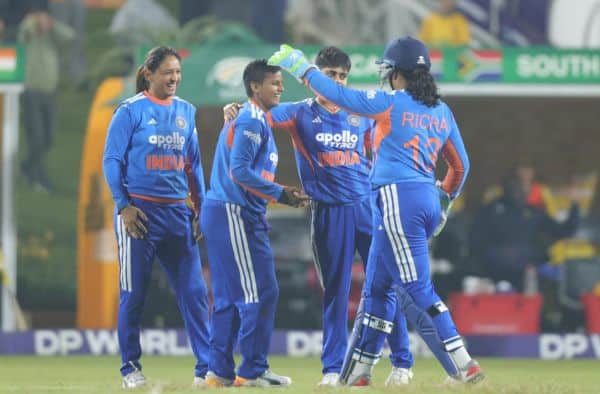
Diana Edulji has called on India’s senior batters to step up as the team prepares for the ICC Women’s T20 World Cup 2026, stressing the need to adapt more effectively to the demands of the shortest format.
With the tournament scheduled to take place in England and Wales from June 12 to July 5, 2026, Edulji highlighted the challenges India have faced in T20 cricket, particularly during their ongoing series against South Africa women’s national cricket team.
Series Struggles Highlight Concerns
India, led by Harmanpreet Kaur, have endured a difficult tour, falling behind 3-1 in the five-match T20I series. South Africa secured dominant wins in the first three matches before India responded with a 14-run victory in the fourth game at Johannesburg on April 25.
Despite that result, the earlier defeats—by six wickets, eight wickets, and nine wickets—have underlined the gaps Edulji believes need urgent attention under head coach Amol Muzumdar.
“Big Guns” Must Fire in T20 Cricket
Speaking about India’s approach, Edulji emphasised the importance of consistent contributions from senior players.
“T20 is a different game altogether, and teams doing well depends on each player’s contribution, and I want big guns to fire, and a total of 170-180 will be challenging,” she said.
“But we are good in the 50-over format, in T20 it is a different ball game.”
Reflecting on recent performances, she added: “We do have young cricketers taking to this game. T20, I am not sure, I have witnessed in the last match against South Africa in Durban, which shows what our girls lack.”
Strong ODI Pedigree, But T20 Questions Remain
India enter this phase after a landmark achievement, winning the Women’s ODI World Cup in 2025 by defeating South Africa by 52 runs at DY Patil Stadium in Navi Mumbai. That triumph marked their first senior ICC title and reinforced their strength in the 50-over format.
The team’s recent record also includes a silver medal at the Commonwealth Games 2022 and gold at the Asian Games 2023, reflecting consistent success across formats—though T20 cricket remains a work in progress.
Olympic Ambitions Add Motivation
Edulji also pointed to cricket’s return to the Olympic Games as a key motivator for the next generation.
“It is a good sign, as we have proved at the Commonwealth Games, and an Olympic medal will add to the flavour. Nothing like being on the podium at the world’s mega sporting event.”
Looking ahead, she sees opportunities for emerging players as the squad evolves: “With many of the present seniors, who will be out of the team, it will be a new opening for the young generation. Winning medals is something every athlete would vouch for, and the Olympics will add cream to the young generation.”
Call for Specialisation in T20 Format
While optimistic about the future, Edulji stressed the need for structural changes, particularly the idea of format-specific squads.
“The odds are against our girls, and it will not take time for them to adapt. I am sure that in the time to come, we will see them filling the gaps.”
“When comparing ODI to T20, I would say to have two different teams, and I am sure each member of the teams will have to think out of the box, and the big hitters should come to the fore and deliver in T20.”
A Defining Phase Ahead
As India prepare for the upcoming global tournament, Edulji’s message is clear: build on ODI success, address T20 shortcomings, and embrace a more specialised approach to remain competitive at the highest level.
