
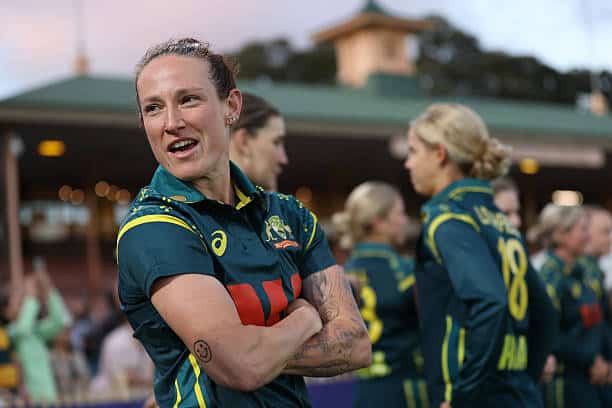
Australian fast bowler Megan Schutt has revealed how an ADHD diagnosis has helped her better understand her emotions and manage the demands of professional cricket.
The 33-year-old has represented Australia for 14 years, winning multiple World Cup titles, Commonwealth Games gold and taking more than 300 international wickets across formats. Known for her aggressive bowling and competitive personality, Schutt has enjoyed a successful career at the highest level.
However, her diagnosis in 2025 provided new insight into emotional challenges she had experienced since childhood. Speaking to ABC Sport, Schutt explained that cricket had long helped her maintain focus and channel her energy.
“Cricket has been a great regulator for me,” she said.
The diagnosis has also coincided with changes in her family circumstances, prompting Schutt to reconsider how she balances international cricket with her responsibilities at home.
Megan Schutt Explains Impact of ADHD Diagnosis
Schutt recalled struggling with frustration and anger from an early age, despite growing up in a happy and supportive family environment. While she could often manage those emotions during cricket, relatively minor situations away from the sport sometimes triggered stronger reactions.
Receiving an ADHD diagnosis helped her make sense of those experiences and reconsider the demanding standards she had set for herself. As she has grown older, Schutt has become more willing to recognise when her body needs rest rather than pushing herself to meet expectations she now considers unrealistic.
She also described improvements since beginning ADHD medication, particularly in her ability to process information and make decisions.
Teammates Darcie Brown and Georgia Wareham have noticed changes in her behaviour, telling Schutt that she is easier to be around when taking her medication.
The treatment has also helped her batting. Schutt explained that she previously struggled with an overwhelming number of possible shot selections, joking that she could have around 1,400 options running through her mind. With greater mental clarity, she has found it easier to concentrate on the immediate demands of the game.
Anti-Doping Rules Create Additional Challenges
Although Schutt has benefited from treatment, managing prescribed medication as a professional athlete involves strict anti-doping requirements. She must obtain a therapeutic use exemption (TUE) for medication covered by anti-doping restrictions. The exemption requires medical approval and must be reviewed annually or whenever her dosage changes.
Schutt admitted that the administrative process can create uncertainty, particularly when athletes must ensure that their documentation remains valid.
“You do stress,” she said while discussing concerns about drug testing.
She also believes the fear of accidental violations affects other players, including younger athletes who avoid certain cold and flu medicines, café protein shakes and food prepared by others. While recognising that athletes are responsible for substances entering their bodies, Schutt expressed frustration about the additional approval process required for prescribed treatment.
Her comments followed a two-match suspension for failing to comply with requirements concerning prescription medication.
The suspension caused her to miss Australia’s third T20I against New Zealand and Adelaide Strikers’ opening Women’s Big Bash League fixture. She later returned against Brisbane Heat at Drummoyne Oval.
Cricket Australia said the circumstances were confidential and confirmed that Schutt had expressed remorse. There has been no indication that the suspension was connected to her ADHD medication, and the specific medication involved has not been publicly identified.
Motherhood and Co-Parenting Shape Schutt’s Priorities
Away from cricket, Schutt has been navigating co-parenting responsibilities with her former wife Jess. The couple share a five-year-old daughter, Rylee, who has autism and ADHD and attends regular physiotherapy, occupational therapy, speech therapy and dietitian appointments.
Maintaining those routines has become increasingly difficult alongside the demands of international touring. Schutt explained that taking Rylee overseas would disrupt her established support arrangements, while extended periods away from home have become emotionally challenging.
She also believes professional cricket’s existing support structures are not sufficiently adapted to the needs of single parents.
As Rylee has grown older, she has become more capable of expressing how much she misses her mother during international assignments.
“I’ve missed so much of Rylee’s life and she’s at an age where she can communicate that sadness and it hurts,” Schutt said.
Schutt Steps Away From ICC Tournaments but Continues ODI Career
Schutt decided to retire from ICC tournaments following Australia’s Women’s T20 World Cup victory at Lord’s in July 2026. Her decision was influenced by the difficulties of spending extended periods away from her daughter, although she remains available for other international assignments.
She continues to contribute to Australia’s ODI side and was named Player of the Series against Bangladesh in October after taking ten wickets, including best figures of 4/16, as Australia completed a 3-0 series victory. The performance demonstrated her continued effectiveness at international level despite the changes to her playing commitments.
Schutt has not played a Test match since 2019, and her decision to step away from ICC tournaments represents a significant adjustment after more than a decade of international competition.
For one of Australia’s most experienced fast bowlers, the next stage of her career will involve continuing to contribute on the field while spending more time with her daughter.
(Quotes sourced from ABC Sport)
