
The International Cricket Council (ICC) has launched criiio Day, an annual celebration of grassroots cricket held on November 1, after its global development programme reached one million participants.
Introduced in 2021, criiio aims to make cricket accessible to people of all ages and backgrounds through free educational resources, school activities and community initiatives. The programme has expanded to emerging cricket nations, helping introduce the sport to communities with limited access to traditional cricket facilities.
The milestone comes as cricket prepares to return to the Olympic Games at Los Angeles 2028. With a curriculum available in 18 languages and equal participation among boys and girls, the ICC hopes to build on criiio’s success and introduce another million people to the game.
What Is the ICC criiio Programme?
criiio is the ICC’s entry-level cricket programme, designed around the principle that cricket can be played anytime, anywhere and by anyone.
Rather than focusing on formal competition, it introduces participants to the basic skills and enjoyment of cricket through adaptable activities. Schools, local cricket associations and community organisations can use its free curriculum without requiring professional facilities or extensive equipment.
Since its launch, the programme has achieved several significant milestones:
- One million participants worldwide since 2021.
- 50:50 gender participation among registered players.
- 18 languages available through its educational curriculum.
- 65 ICC Associate Members implementing national criiio programmes.
- All 12 ICC Full Members having certified criiio trainers.
- Approximately 5,000 equipment sets distributed to support grassroots activities.
The ICC has worked with national governing bodies, volunteers and development partners to expand the initiative, particularly in countries where cricket has traditionally had a limited presence.
Nigerian Teenager Saidat Hamzat Becomes One Millionth Participant
The programme’s one millionth participant is Saidat Hamzat, a 13-year-old student from Lagos State, Nigeria.
Saidat first encountered cricket when a criiio Festival was organised at her school. Initially unfamiliar with the sport, she became interested after taking part in the activities and discovering how much she enjoyed playing.
Her involvement has since helped her develop greater confidence, discipline and a stronger sense of belonging at school. Cricket has also encouraged her to become more outspoken among her classmates, who now closely associate her with the game.
Saidat’s mother has noticed positive changes in her daughter’s confidence and happiness and hopes she may eventually represent Nigeria internationally.
The ICC highlighted Saidat’s experience as an example of how introductory sporting programmes can provide opportunities beyond competition, helping young people build friendships, confidence and personal skills.
ICC CEO Sanjog Gupta Welcomes Global Milestone
ICC Chief Executive Officer Sanjog Gupta welcomed the achievement and emphasised the importance of removing barriers to cricket participation. He credited ICC Members, development partners, volunteers and local cricket organisations for helping the programme reach one million players.
Gupta also highlighted the role of grassroots initiatives in expanding cricket’s international audience ahead of the Los Angeles 2028 Olympic Games.
The ICC views the sport’s Olympic return as an opportunity to attract new participants, particularly children who may have had little previous exposure to cricket.
By establishing criiio Day, the governing body aims to recognise the teachers, coaches, volunteers and communities responsible for introducing the game to new audiences.
Africa Leads criiio Growth With More Than 400,000 Players
Africa has emerged as the largest regional contributor to criiio’s expansion, accounting for more than 400,000 participants. School-based activities and community programmes have helped introduce cricket to children across the continent, including in areas where organised cricket opportunities have historically been limited.
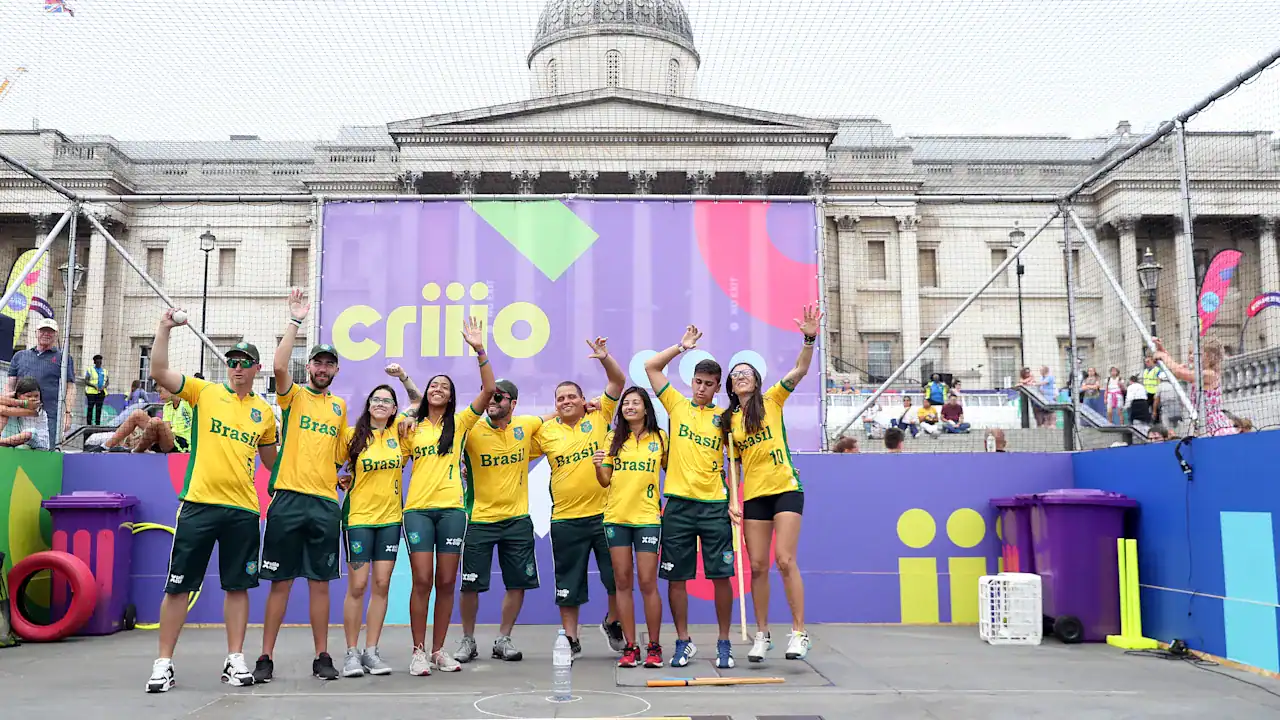
Brazil has recorded nearly 200,000 participants, making it the leading individual country in the programme, while Bhutan has surpassed 100,000.
These figures demonstrate how cricket can attract substantial participation outside its traditional strongholds when introductory activities are adapted to local conditions. Nigeria’s progress is particularly notable, with Saidat Hamzat’s story illustrating the growing interest generated by school cricket initiatives.
Tanzania Expands Cricket Through Chanzo Cricket Programme
Tanzania has developed a local adaptation of criiio called Chanzo Cricket, using Swahili-language resources to introduce the sport to schoolchildren. The initiative has received government support, with cricket identified as a priority sport for the country’s 3,542 secondary schools.
Chanzo Cricket is expected to become the main programme for introducing cricket across Tanzania’s secondary school system. By integrating the sport into schools, local organisers aim to establish regular participation and create opportunities for children who might otherwise have little access to cricket.
The approach also demonstrates how the ICC’s international development framework can be adapted to different languages, educational systems and community needs.
criiio Reaches Remote Communities in Asia and South America
The programme has expanded into a wide range of locations, including Japan, Mongolia and Chile. In Japan, organisers have introduced cricket through activities on padel courts beneath Tokyo Skytree, showing how existing recreational spaces can accommodate the sport.
In Mongolia, criiio sessions have reached communities approximately 1,600 kilometres from the capital, Ulaanbaatar, bringing cricket to remote areas where conventional facilities are scarce.
Chile has used the programme to encourage participation among migrant children, providing opportunities for young people from different cultural backgrounds to interact through sport.
These initiatives reflect criiio’s flexible approach, allowing local organisers to introduce cricket without relying on dedicated stadiums or formal competitive structures.
Young Players Progress From criiio to International Cricket
Although criiio primarily focuses on recreational participation, some young players have already progressed into international age-group cricket. Argentina’s Luna Olivera and Nigeria’s Chisom Mary Okpe are two examples of players whose development began through grassroots initiatives.
Olivera, 14, was introduced to cricket through Argentina’s Cricket Sin Fronteras community programme in 2023. She subsequently progressed into organised cricket and earned selection for Argentina’s women’s Under-19 team in 2026.
Okpe first encountered the sport through a school-based criiio session in Nigeria in 2025 before advancing to the national Under-19 team. Her development has placed her among the young cricketers who could potentially feature at the 2027 ICC Under-19 Women’s T20 World Cup.
Their progress demonstrates how introductory programmes can support both recreational participation and the identification of emerging talent.
Why Is criiio Day Celebrated on November 1?
The ICC selected November 1 for criiio Day because of its connection to the programme’s branding. Written numerically as 1.11, the date reflects the three lowercase letters i in the name criiio, which symbolise the stumps and bails of a cricket wicket.
The inaugural celebration took place on November 1, 2026, supported by a global digital campaign encouraging ICC Members, cricket organisations and participants to share their experiences.
The campaign uses the hashtag #criiioDay to highlight grassroots events, community activities and personal stories.
The annual celebration is intended to recognise the contributions of coaches, teachers, volunteers and local organisers while encouraging further participation.
ICC Targets Further Growth Ahead of Los Angeles 2028 Olympics
Cricket’s return to the Olympic Games at Los Angeles 2028 provides an important opportunity for the ICC to expand the sport’s international reach. The governing body hopes increased global attention will encourage more schools, communities and national associations to introduce cricket through programmes such as criiio.
Reaching one million participants since 2021 represents a major development milestone, but sustaining that growth will require continued investment in equipment, coaching and accessible playing opportunities.
With criiio Day now established as an annual event, the ICC is targeting another million participants worldwide.
From schoolchildren in Nigeria and Tanzania to emerging players in Brazil, Bhutan, Japan and Mongolia, the programme has demonstrated how cricket can develop beyond its traditional markets through accessible, community-based participation.
