
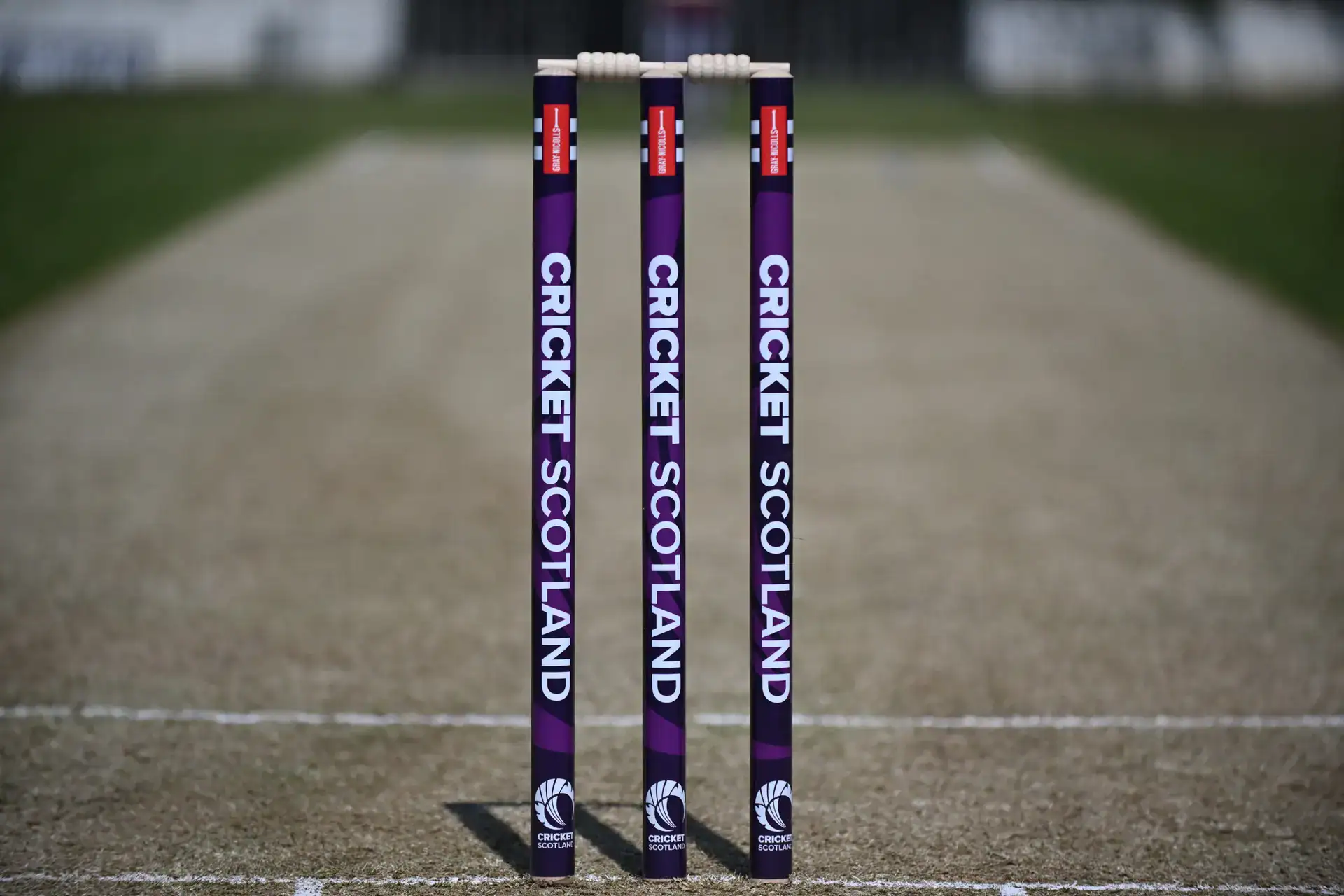
Cricket Scotland has announced that it will stop arranging bilateral matches against Afghanistan, citing restrictions on women’s and girls’ participation in sport under the Taliban government and wider human rights concerns.
The decision follows a review of the governing body’s relationship with the Afghanistan Cricket Board (ACB), prompted by requests involving training facilities and Scottish players’ potential participation in Afghanistan’s proposed T20 franchise league.
Scotland will continue to face Afghanistan in International Cricket Council (ICC) tournaments and official warm-up matches. The policy aligns with similar restrictions introduced by Cricket Australia and the England and Wales Cricket Board (ECB).
Cricket Scotland Explains Decision to Suspend Bilateral Fixtures
Cricket Scotland said its position reflected its commitment to supporting women’s and girls’ cricket amid continuing restrictions in Afghanistan. Since the Taliban returned to power in August 2021, women have been effectively excluded from organised sport, while their access to education and employment has also been severely restricted.
Afghanistan became an ICC Full Member in 2017, but the absence of an active women’s national cricket team has raised questions about its compliance with the organisation’s membership expectations.
The Scottish governing body confirmed that its policy would remain subject to review.
“This policy will be kept under review annually or following any significant ICC decision or material change in circumstances,” Cricket Scotland stated.
The restrictions apply specifically to independently arranged bilateral fixtures rather than matches played under ICC tournament arrangements.
Afghanistan Cricket Board Requests Prompted Review
Cricket Scotland began examining its relationship with the ACB during the summer of 2026 after receiving a request to provide training facilities ahead of Afghanistan’s men’s series against Ireland.
The July request was declined because of short notice and the lack of suitable available venues.
A second approach followed in September concerning Afghanistan’s proposed Premier League T20 competition and the possibility of Scottish cricketers participating.
These requests prompted Cricket Scotland to establish a formal policy governing future engagement with Afghanistan. Contracted players from Scotland’s men’s and women’s teams were subsequently informed of the decision.
The countries have not met in a full international match since the 2021 Men’s T20 World Cup, although they played warm-up fixtures before the 2024 and 2026 tournaments.
George Munsey Could Receive Approval for Afghanistan Premier League
Scotland opening batter George Munsey was the only Scottish player selected in the Afghanistan Premier League draft referenced in the announcement. Despite the restrictions on bilateral cricket, Cricket Scotland confirmed that it would honour its contractual obligations and consider No-Objection Certificates (NOCs) for players seeking opportunities in approved overseas competitions.
Munsey could therefore receive permission to participate if the proposed league obtains official ICC sanction and meets the relevant approval requirements.
However, Cricket Scotland emphasised that allowing individual players to compete would not represent support for the Taliban government’s policies.
“If an NOC is issued, participation by the player/s must not be interpreted as an endorsement by Cricket Scotland of the current Afghan regime or its policies,” the governing body stated.
Afghanistan Women’s Cricket Faces Continuing Restrictions
Afghanistan’s women’s cricket programme has remained inactive since the Taliban returned to power in 2021, forcing several players to continue their careers overseas. A number of former national team players relocated to Australia, while the Afghanistan Refugee Women’s XI toured England during the summer of 2026, coinciding with the Women’s T20 World Cup.
The ICC has also introduced a development roadmap aimed at creating opportunities for displaced Afghan women cricketers, including a potential pathway towards international competition by 2030.
Although these initiatives have provided some opportunities outside Afghanistan, they have not restored an officially operating women’s national team within the country. Meanwhile, Afghanistan’s men’s national side continues to participate in international cricket, despite the restrictions affecting women’s participation.
Scotland Joins Australia and England in Restricting Afghanistan Fixtures
Cricket Scotland’s decision follows the approach taken by Cricket Australia and the ECB, which have also restricted bilateral matches against Afghanistan while continuing to participate in ICC competitions. The policy adds Scotland to the group of national cricket boards using bilateral scheduling decisions to express concerns about the treatment of women and girls in Afghanistan.
For Afghanistan’s men’s team, the restrictions further limit opportunities to arrange international series against certain opponents without affecting participation in ICC tournaments.
Cricket Scotland will reassess its position annually or following significant developments involving the ICC or conditions in Afghanistan.
