
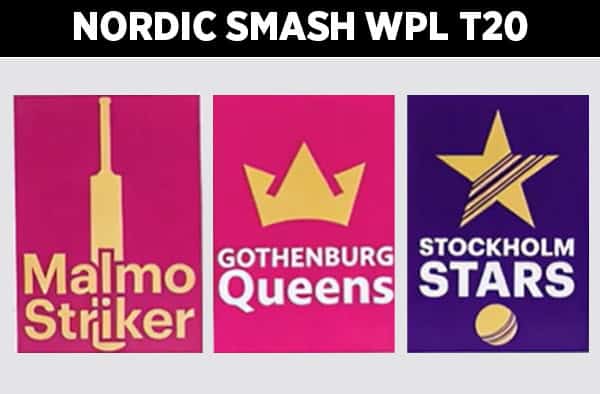
Women’s cricket in Scandinavia is set for a major step forward with the introduction of the Nordic Smash WPL T20, billed as Europe’s first franchise-based women’s cricket competition. Scheduled to be played in Stockholm, the league brings a city-franchise structure to the Nordic region for the first time and marks a notable change in how the women’s game is organised and presented across Sweden and nearby countries.
Three sides have been confirmed for the debut season: Stockholm Stars, Gothenburg Queens and Malmo Strikers. Each team is tied to one of Sweden’s leading cities, a move intended to spark local rivalries and help franchises grow lasting support. Stockholm Stars will carry the identity of the capital, widely viewed as the centre of Swedish cricket, while Gothenburg Queens place western Sweden firmly in the frame.
Malmo Strikers round out the lineup and reflect cricket’s expanding presence in the south. While the franchises represent different cities, every match will be staged in Stockholm, keeping the tournament’s attention on a venue that already plays a key role in domestic and international cricket activity.
The Nordic Smash T20 follows years of gradual progress guided by the Swedish Cricket Federation. Women’s involvement has risen through club structures, youth development and international routes, with Sweden’s national team becoming more competitive in the Associate landscape. Even so, elite domestic opportunities for women have remained limited, often centred on short-format national events or regional tournaments.
A key part of that pathway has been the Nordic Cup, a regional competition that has typically included Sweden, Denmark, Norway and Finland. The Nordic Cup has encouraged cross-border cooperation and offered valuable match experience for women’s teams in the region. Sweden have often been among the stronger sides in the women’s category, while Denmark’s longer cricket tradition has ensured regular, competitive contests. Norway and Finland, meanwhile, have continued to focus on grassroots growth, widening participation across Scandinavia.
In contrast to the Nordic Cup’s national-team setup, the Nordic Smash T20 moves to a franchise model designed to reflect the structure of successful T20 leagues elsewhere. With teams linked to cities rather than countries, the competition aims to strengthen community connection and build clear identities that fans can follow season after season. The format also points to a denser run of T20 cricket, helping players develop skills in the shortest format and offering a more defined route for those targeting international selection.
The league’s importance extends beyond on-field results. Women’s franchise cricket has grown quickly in established cricket countries, but Europe has been slower to provide a comparable stage. By launching the Nordic Smash T20, Scandinavia positions itself at the leading edge of that development on the continent, signalling ambitions not only in performance terms but also in long-term structure.
With more details on squads and fixtures still to come, attention remains on Stockholm as the host city. If the tournament matches the intensity and standard it is expected to deliver, it could stand as a defining moment for women’s cricket in the Nordics and offer a model for similar projects elsewhere in Europe.
